
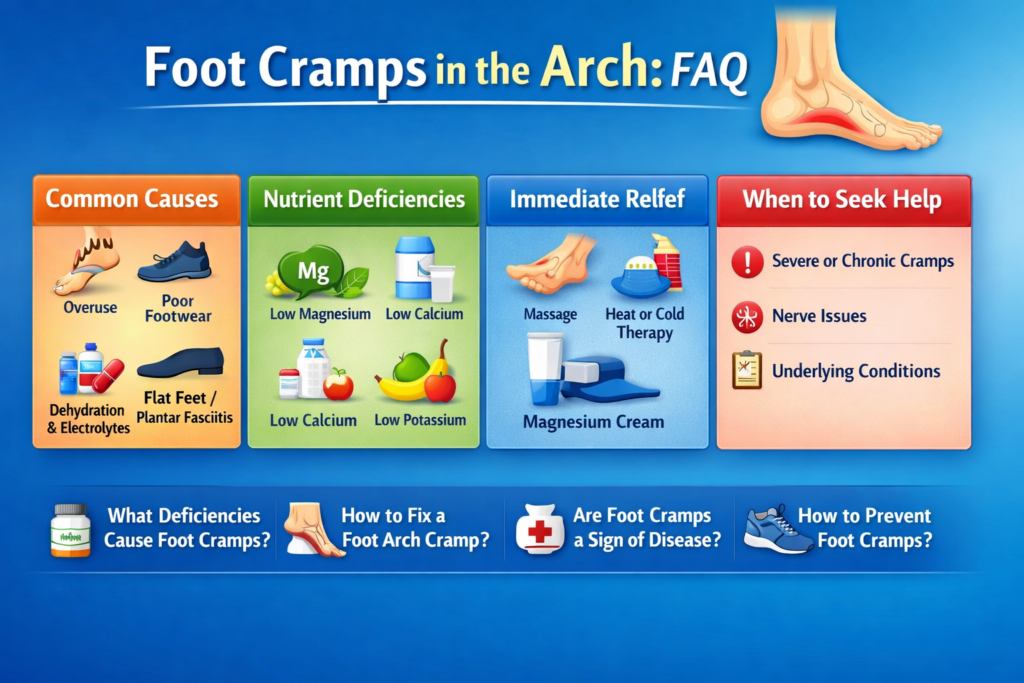
Foot cramps, particularly in the arch, are common yet often overlooked discomforts that many people experience. Whether you’re dealing with a sudden cramp during the night or chronic cramps that affect your daily routine, understanding what causes foot cramps and how to address them is key to restoring comfort and improving mobility. This guide will explain the root causes of cramps in the arch of the foot, why they happen, and, most importantly, how to manage them effectively using natural remedies, including the benefits of magnesium cream.
What Are Foot Cramps?
A foot cramp is an involuntary contraction of the muscles in the foot. It’s typically described as a sharp, sudden, and painful tightening of the muscles that can cause temporary discomfort or even muscle spasms. These cramps can occur in various parts of the foot, but when they happen in the arch, they can feel more intense and disruptive.
- Common Causes of Foot Cramps: Foot cramps are usually caused by a variety of factors, including:
- Dehydration and mineral imbalances, particularly a lack of magnesium, calcium, or potassium.
- Overuse or muscle fatigue due to prolonged walking, standing, or exercising.
- Poor circulation, which can cause the muscles in the feet to cramp.
- Foot positioning, like wearing improper footwear or standing for long periods without rest.
While cramps can happen anywhere in the foot, cramps in the arch are especially problematic due to the muscle tension and pressure the arch area endures from the weight-bearing activities of walking and standing.
How Foot Cramps in the Arch Differ
While cramps can occur in any part of the foot, arch cramps are particularly unique. The arch of the foot is a complex area that involves a network of muscles, tendons, and ligaments that support the body’s weight when standing, walking, or running.
- Pain intensity: Cramps in the arch tend to feel deeper and more intense than those in the toes or the ball of the foot because of the structural role of the arch. The muscles involved in arch cramps are tightened and contracted under increased pressure, making it feel like the foot is being “pulled.”
- Increased discomfort: Arch cramps may also cause lingering pain or stiffness even after the cramp has passed, especially if the foot has been overused or the arch is not well-supported by shoes or insoles.
- Impact on movement: Since the arch supports much of the body weight, cramping in this area can severely limit movement, making it difficult to walk or stand comfortably.
The Importance of Addressing Foot Cramps
Foot cramps, especially in the arch, should not be ignored. Not only can they cause immediate discomfort, but recurrent cramping can lead to more long-term issues with mobility and quality of life.
- Impact on Mobility: The pain from foot cramps can make it difficult to walk, stand, or even carry out everyday activities. The inability to properly use your feet for movement can cause a cascade effect, leading to discomfort in the knees, hips, or back due to altered gait and posture.
- Disruption of Daily Activities: Whether it’s at work, during exercise, or while performing household chores, foot cramps can interrupt daily routines and cause significant inconvenience. The sudden onset of pain can catch you off guard, making it difficult to complete tasks or focus on activities.
- Overall Comfort: Recurrent cramps or discomfort in the feet, particularly in the arch, can cause chronic discomfort. Even if the cramp doesn’t last long, it can leave the muscles feeling tight or tender, affecting your comfort level throughout the day.
Reassurance & Purpose of the Guide
If you’re experiencing foot cramps in the arch, there’s hope for relief. By understanding the causes and implementing effective, natural treatments, you can significantly reduce cramping episodes and improve your overall comfort. In this guide, you will learn practical solutions to address foot cramps, including magnesium cream for muscle relaxation and pain relief.
Whether you’re looking for immediate relief or long-term prevention, this guide will provide you with the tools and knowledge to manage foot cramps effectively and help you get back to feeling your best.
Common Causes of Foot Cramps in the Arch
Foot cramps, particularly in the arch, are often caused by a variety of factors. Understanding the common causes behind these cramps is essential for prevention and relief. The arch of the foot is a vital area that plays a significant role in supporting the body’s weight, and when it experiences stress or strain, cramps can occur. Let’s dive into the main causes of foot cramps in the arch and how each one contributes to this discomfort.
Overuse and Muscle Fatigue
One of the most common causes of foot cramps is muscle overuse, particularly in the arch. This can occur when you engage in activities that place excessive demand on the foot muscles, such as:
- Prolonged standing: When standing for long periods, especially on hard surfaces, the muscles in the arch become fatigued, leading to cramping.
- Walking or running: High-impact activities like walking or running put continuous pressure on the arch. If the muscles aren’t well-conditioned, they can cramp due to fatigue and strain.
- Physical activity without rest: Activities like exercise or sports without proper breaks can cause muscle fatigue, leading to tightness and eventual cramping in the arch.
When the foot muscles (especially in the arch) are used more than usual or without sufficient recovery, they can become overworked and susceptible to cramping.
Poor Footwear and Posture
Another key contributor to foot cramps is wearing incorrect footwear or adopting poor posture, both of which place added strain on the arch.
- Poor footwear: Shoes that lack proper support, such as flats, high heels, or shoes with insufficient arch support, can lead to muscle imbalances and strain in the foot. Without proper arch support, the muscles in the arch are forced to work harder, leading to muscle fatigue and cramps.
- Postural issues: Poor posture, whether from slouching or misalignment while standing or sitting, can also affect the feet. Misalignment in the body can cause an uneven distribution of weight, placing more stress on the arch of the foot and contributing to cramps.
Ensuring that your shoes provide adequate support and paying attention to your posture can help reduce strain on the arch and prevent cramps.
Dehydration and Mineral Imbalance
Dehydration and electrolyte imbalances are significant contributors to foot cramps, including those in the arch. When the body lacks adequate hydration or important minerals, the muscles can become more prone to cramping.
- Hydration: Proper hydration helps muscles function optimally. When you are dehydrated, your muscles can become more susceptible to spasms and cramps. This is particularly true when engaging in physical activity or during hot weather.
- Magnesium and Electrolytes: A magnesium deficiency is one of the leading causes of muscle cramps. Magnesium plays a key role in muscle relaxation and contraction. When magnesium levels are low, muscles, including those in the foot arch, become more prone to cramping. Other electrolytes, such as potassium and calcium, also play a role in preventing cramps.
- Magnesium Cream: Applying magnesium cream 25% to the arch of the foot can help replenish magnesium levels locally and provide immediate relief to the muscles in the foot. This topical treatment can be a great way to address magnesium deficiency and reduce the occurrence of cramps.
Foot Conditions
Certain foot conditions can increase the likelihood of experiencing foot cramps, particularly in the arch. Some of the most common foot conditions that contribute to foot cramps include:
- Plantar Fasciitis: This condition occurs when the plantar fascia, a thick band of tissue running along the bottom of the foot, becomes inflamed. The pain from plantar fasciitis often radiates through the arch and can cause cramps.
- Flat Feet: Individuals with flat feet or fallen arches may experience additional strain on their foot muscles, as the arch doesn’t have sufficient support. This leads to increased stress on the muscles, resulting in muscle fatigue and cramps.
- Overpronation: When the foot rolls inward excessively, it can place extra pressure on the arch, leading to tension and cramping in the foot.
Treating the underlying condition with proper foot care, such as arch supports, custom insoles, or magnesium cream, can help alleviate cramps and discomfort.
Hormonal Changes and PMS
Hormonal fluctuations, especially during PMS or pregnancy, can trigger foot cramps, particularly in the arch. The luteal phase of the menstrual cycle, which occurs in the two weeks before menstruation, is characterized by hormonal shifts that can lead to muscle cramps and spasms.
- Estrogen and Progesterone: During PMS or pregnancy, estrogen and progesterone levels fluctuate, affecting fluid balance, muscle tone, and circulation, which can contribute to foot cramps.
- Pregnancy: Pregnancy-related changes in hormone levels and increased weight can also put strain on the arch and lead to foot cramps. The growth of the baby and changes in posture during pregnancy often cause muscle fatigue and cramps, particularly in the arch.
Using magnesium cream during these times can provide relief from cramps, especially since magnesium helps balance muscle function and fluid retention.
Summary
The causes of foot cramps in the arch can vary, but the most common contributors include overuse, poor footwear, dehydration, and underlying foot conditions. Hormonal changes, particularly during PMS or pregnancy, can also play a significant role in triggering cramps. By understanding these causes, you can take proactive steps to prevent and manage foot cramps effectively. Incorporating magnesium cream as part of your foot care routine can provide immediate relief and help reduce the frequency of cramps by promoting muscle relaxation and replenishing magnesium levels.
How Foot Cramps in the Arch Feel
Foot cramps, particularly in the arch, can be incredibly uncomfortable and disruptive to daily life. Understanding how these cramps feel, when they occur, and their duration can help in both prevention and relief. Here’s a closer look at how foot cramps in the arch manifest:
Pain Description
Foot cramps in the arch are usually characterized by a sharp, tight, and sometimes deep aching pain that can make movement difficult. The pain can feel as though the muscles in the arch are being pulled or contracted tightly, causing discomfort in the area.
- Sharp or Stabbing Pain: At the onset of a foot cramp, you may experience a sharp, stabbing pain that feels intense, often coming in sudden waves.
- Tightness and Muscle Spasm: Many people describe foot cramps in the arch as a feeling of muscle tightness or a muscle spasm that can last for several seconds or even minutes.
- Deep Ache: Once the cramp begins to ease, the muscles in the arch may feel sore or tender, leaving a lingering deep ache.
The pain can often feel localized, but it may radiate or refer to other areas like the toes, heel, or calf, depending on the intensity and severity of the cramp.
When Pain Occurs
Foot cramps in the arch can strike at various times, often when the muscles are under strain or haven’t had adequate rest. Some common scenarios when arch cramps occur include:
- At Night: Foot cramps often occur during the night while you’re sleeping, especially if you’ve been on your feet all day. The muscles in the arch can tense up due to lack of movement or poor circulation while you sleep, leading to cramping.
- After Prolonged Activity: If you’ve been standing, walking, or engaging in physical activity for long periods, the muscles in your feet may become fatigued and prone to cramping. This is especially common after long walks, running, or extended standing, particularly if you’re wearing shoes that don’t provide proper support for your arch.
- During Rest or Inactivity: Paradoxically, foot cramps in the arch can also occur during periods of rest, such as after a long period of inactivity or in the morning after waking up. Dehydration and electrolyte imbalances during the night can also contribute to cramping when the body is at rest.
Duration and Intensity
The intensity and duration of foot cramps in the arch can vary from person to person. While they can be brief, they are often intense and difficult to manage in the moment. Here’s a breakdown of how foot cramps in the arch may feel:
- Short Duration: Most foot cramps in the arch last anywhere from 30 seconds to 2 minutes, though they can feel much longer during the episode. The sharpness of the pain tends to fade as the muscle relaxes.
- Lingering Discomfort: After the cramp subsides, some individuals experience lingering discomfort or tenderness in the arch, which can last for a few minutes to several hours. The soreness is often due to the muscle being overworked during the cramp.
- Varying Intensity: The intensity of foot cramps in the arch can range from mild to severe:
- Mild cramps may cause slight discomfort or tightness but are still manageable.
- Severe cramps can result in sharp pain that disrupts your ability to walk, stand, or even move your foot.
While mild cramps might only cause temporary discomfort, severe cramps can cause a significant interruption in daily activities and require immediate relief.
Summary
Understanding how foot cramps in the arch feel is essential for effective management. They can manifest as sharp, tight pain that often occurs at night, after long periods of activity, or during rest. Their duration can vary, but they typically last from a few seconds to a few minutes, leaving lingering discomfort afterward. The intensity of these cramps can range from mild to severe, depending on the cause and the individual.
By recognizing these symptoms, you can take proactive steps, such as using magnesium cream for relief, practicing proper foot care, and implementing hydration and stretching techniques to reduce the frequency and intensity of foot cramps.
Preventing Foot Cramps in the Arch
Foot cramps, especially in the arch, can be disruptive and uncomfortable. Fortunately, there are several preventive measures you can take to reduce the frequency and intensity of these cramps. By focusing on proper footwear, hydration, stretching, and posture, you can help prevent foot cramps and ensure better foot health.
Proper Footwear
One of the most important factors in preventing foot cramps in the arch is wearing the right footwear. Poor shoes that lack proper support can place unnecessary stress on the foot muscles, leading to muscle fatigue and cramps.
- Supportive Shoes: Choose shoes that offer arch support and cushioning. Shoes with orthotic insoles or custom arch supports help distribute weight evenly across the foot, reducing pressure on the arch.
- Avoiding High Heels and Flats: High heels and flat shoes without support often cause the foot to be in unnatural positions, leading to muscle strain. Opt for shoes with a small heel or flats with arch support.
- Orthotics: If you experience frequent cramps in the arch, consider using orthotics (custom or over-the-counter). These are designed to align and support the foot’s natural structure, particularly in the arch, preventing unnecessary tension and cramping.
Hydration and Electrolytes
Proper hydration and a balanced intake of electrolytes are crucial in preventing muscle cramps, including in the arch of the foot. When you’re dehydrated or lacking essential minerals, your muscles become more prone to spasms.
- Stay Hydrated: Ensure that you’re drinking enough water throughout the day to keep your muscles hydrated. Dehydration can increase the risk of muscle cramps, including in the foot arch. The general recommendation is to drink 8-10 glasses of water a day, but you may need more depending on activity levels and environmental conditions.
- Magnesium and Calcium: Magnesium plays a key role in muscle relaxation, while calcium helps muscles contract properly. To maintain an optimal balance, incorporate magnesium-rich foods (such as leafy greens, nuts, and seeds) and calcium-rich foods (like dairy products, fortified non-dairy milk, and leafy greens) into your diet.
- Magnesium Cream: Applying magnesium cream to the arch can also directly address magnesium deficiency, helping relax the muscles and prevent cramps. It’s a natural and localized solution to replenish magnesium levels in the body.
Stretching and Strengthening Exercises
Incorporating stretching and strengthening exercises into your routine is essential for preventing foot cramps in the arch. These exercises help relieve tension, improve flexibility, and strengthen the muscles that support the arch.
- Stretching:
- Toe Stretch: Sit on the floor and extend one leg. Use a towel to gently pull the toes back towards you to stretch the bottom of your foot and the arch.
- Arch Stretch: Stand up and place one foot in front of the other, then gently bend your knees and press your back heel into the floor. Hold for 20-30 seconds to stretch the arch and relieve tension.
- Strengthening:
- Towel Scrunches: Place a towel on the floor and use your toes to scrunch it towards you. This exercise strengthens the muscles in the arch and toes, preventing weakness that can lead to cramps.
- Calf Raises: Stand with your feet flat on the floor and raise your heels, coming up onto the balls of your feet. This strengthens the calf muscles and helps support the arch.
Regular stretching and strengthening exercises can significantly reduce the occurrence of foot cramps, improve the flexibility of your arch, and promote better overall foot health.
Posture and Gait Adjustments
Your posture and gait (how you walk) play a huge role in how much strain is placed on your feet and arches. If your body is misaligned, it can lead to unnecessary stress on the feet, increasing the likelihood of cramps.
- Posture Awareness: Pay attention to your posture throughout the day, especially while standing or sitting. Ensure that your body weight is evenly distributed between both feet and avoid slouching or leaning forward, as this can add pressure to your arch.
- Gait Adjustments: If you tend to walk in a way that puts excessive pressure on your arch (such as walking on the inside or outside of your foot), try to correct your foot mechanics. Wearing orthotic insoles can help align your foot and prevent improper gait patterns.
- Foot Positioning During Rest: Pay attention to how you position your feet during rest or while sleeping. Avoid positions that may over-extend your arch. If you’re sleeping on your side, use a pillow between your legs to keep your body aligned and relieve pressure on your feet.
Summary
Preventing foot cramps in the arch involves taking proactive steps that address both the physical and functional aspects of foot care. Supportive footwear, proper hydration, stretching, and improving posture and gait can all contribute to reducing cramps. Additionally, incorporating magnesium cream into your routine can provide targeted relief for the arch, reducing muscle tension and promoting muscle relaxation.
By staying consistent with these practices, you can not only relieve current cramps but also prevent future foot arch cramps from occurring, leading to better foot health and overall comfort.
Immediate Relief for Foot Cramps
Foot cramps in the arch can be excruciating and disrupt your daily activities. Fortunately, there are several immediate relief strategies you can use to address the pain. These methods, including massage techniques, heat and cold therapy, and the use of magnesium cream, provide quick and effective relief. Let’s explore these options in detail.
Massage Techniques
Gentle massage is one of the most effective ways to release tension and alleviate the pain caused by foot cramps, especially in the arch. By applying gentle pressure and working on the muscles, you can promote blood flow, reduce tightness, and speed up recovery.
- How to Massage the Arch of the Foot:
- Sit in a comfortable position with one leg crossed over the other.
- Use your thumbs or fingertips to gently press into the arch of your foot, starting from the heel and working your way toward the toes.
- Apply firm but gentle pressure, moving in circular motions to ease the muscle tightness.
- For more relief, you can also use a tennis ball or massage roller to roll under your foot and target specific tight spots in the arch.
- Stretch the foot gently as you massage, pulling your toes toward you to lengthen the muscles in the arch and relieve the cramp.
This technique helps relieve tension, increase circulation, and promote muscle relaxation, making it an excellent first step in managing foot cramps.
Heat vs. Cold Therapy
Both heat and cold therapies can be used to provide relief from foot cramps, but they serve different purposes.
- Heat Therapy:
- Purpose: Heat helps to relax muscles, ease stiffness, and promote blood flow to the affected area. It is ideal for chronic cramps or muscle tightness.
- How to Use: Apply a warm compress or heating pad to the arch of your foot for 15-20 minutes. You can also soak your foot in warm water with Epsom salts to relax the muscles further.
- When to Use: Heat therapy is most effective when the muscle is tight or overworked, and you want to promote relaxation and improve circulation.
- Cold Therapy:
- Purpose: Cold therapy helps reduce inflammation and numbs the pain, making it effective for acute cramps that cause sharp, stabbing pain.
- How to Use: Use an ice pack or cold compress wrapped in a towel and apply it to the affected area for 10-15 minutes. Avoid applying ice directly to the skin to prevent frostbite.
- When to Use: Cold therapy is most beneficial immediately after the cramp occurs, especially if the foot feels swollen or inflamed.
Both therapies can be used depending on the nature of the cramp. Heat is great for chronic tightness, while cold is ideal for acute pain and inflammation.
Magnesium Cream 25%
One of the most effective natural treatments for foot cramps, especially in the arch, is magnesium cream 25%. Magnesium is essential for muscle function, and its muscle-relaxing properties can help relieve foot cramps quickly and effectively.
- How Magnesium Cream Helps:
- Magnesium is a crucial mineral that helps regulate muscle contraction and relaxation. When applied topically, magnesium cream is absorbed through the skin and directly targets the muscles, helping them relax and release tension.
- For foot cramps in the arch, magnesium cream works by calming the overactive muscles, reducing tightness, and preventing further spasms.
- How to Apply Magnesium Cream:
- Take a small amount of magnesium cream and gently massage it into the arch of your foot where the cramp is located.
- You can also apply the cream to other areas of discomfort, such as the calf or heel, if you experience pain or tightness there as well.
- Massage the cream in using circular motions, allowing it to absorb fully into the skin.
- Use it nightly as part of your bedtime routine for consistent relief from muscle tension and cramping.
Magnesium cream offers a non-invasive, natural solution for foot cramps and can be particularly helpful if cramps are a regular issue for you.
Summary
For immediate relief from foot cramps in the arch, a combination of massage, heat and cold therapy, and magnesium cream can provide quick and lasting relief.
- Massage techniques help ease muscle tension and improve circulation.
- Heat therapy is ideal for promoting relaxation, while cold therapy can reduce inflammation and numb the pain.
- Magnesium cream works to directly address muscle tightness and cramps in the arch by promoting muscle relaxation and improving sleep quality, particularly when applied before bed.
By integrating these techniques, you can manage foot cramps more effectively and improve your foot health.
Long-Term Solutions for Foot Cramp Prevention
Foot cramps, especially those in the arch, can be a persistent issue, but by establishing a consistent foot care routine, focusing on muscle relaxation, and strengthening the feet, you can significantly reduce their occurrence. Long-term prevention requires a holistic approach that supports muscle health, flexibility, and overall foot function. Here’s how to effectively prevent foot cramps from recurring.
Consistency in Foot Care
One of the most important factors in preventing foot cramps is consistency in foot care. When you make foot care a part of your daily routine, you’re actively reducing the chances of cramps. Regular foot maintenance helps maintain muscle relaxation, improve circulation, and ensure the proper alignment of the foot.
- Daily Foot Stretches: Make stretching a daily habit to release tension and improve the flexibility of your foot muscles. Stretching the arch, calf, and toes will help keep the muscles in your feet flexible and reduce the risk of tightness or cramping.
- Magnesium Application: Consistently applying magnesium cream to the arch of your foot can help maintain muscle relaxation. Magnesium supports the body’s ability to relax muscles and improve circulation, helping to prevent cramps in the arch. Using it as part of your nightly routine can reduce muscle tension and improve sleep, providing relief before cramps even begin.
Maintaining Muscle Relaxation
To prevent foot cramps in the long run, maintaining consistent muscle relaxation is crucial. Regular magnesium application helps keep the muscles of the arch, toes, and heels in a relaxed state, preventing them from becoming overly tense and susceptible to cramps.
- Magnesium for Muscle Relaxation: As the muscle relaxant, magnesium can be absorbed topically through the skin via magnesium cream. By applying this cream daily, you help to calm the muscles in the arch and relieve any ongoing tension or discomfort.
- Routine Relaxation: Along with magnesium cream, engage in practices that support muscle relaxation, such as yoga, deep breathing, or gentle stretching. These practices help to release tension in the feet, improving overall muscle function.
Strengthening the Feet
A crucial aspect of long-term prevention is strengthening the muscles that support the arch of the foot. The more strength and stability your feet have, the less likely they are to cramp under stress.
- Strengthening Exercises for the Feet: Incorporating exercises that target the foot arch and supporting muscles will reduce muscle imbalances and improve overall foot health. Here are a few exercises that can help strengthen your feet:
- Towel Scrunches: Sit in a chair and place a towel flat on the floor. Use your toes to scrunch the towel towards you. This exercise strengthens the muscles in the foot and helps improve flexibility in the arch.
- Calf Raises: Stand with your feet shoulder-width apart, then raise your heels and come up onto the balls of your feet. Hold for a moment, then lower back down. This exercise strengthens the calf and foot muscles, including those that support the arch.
- Toe Spreads: Sit comfortably and place your feet flat on the floor. Spread your toes apart as far as you can, hold for a few seconds, and then relax. This exercise improves the strength and flexibility of the toe muscles, which are essential for proper foot function.
- Foot-Specific Strengthening: For additional strength and mobility, consider using foot rollers or massage balls to target specific pressure points and relieve tension in the arch. Regular practice can lead to greater strength and stability, reducing the risk of cramping.
Summary
Preventing foot cramps in the arch requires a long-term, proactive approach that includes consistent foot care, regular relaxation, and muscle strengthening. Here’s a recap of the strategies to prevent cramps:
- Consistency in Foot Care: Regular stretching, magnesium cream application, and maintaining proper foot hygiene.
- Maintaining Muscle Relaxation: Use magnesium cream to relax muscles and improve circulation. Combine it with relaxation techniques like yoga and stretching.
- Strengthening the Feet: Incorporate strengthening exercises like towel scrunches, calf raises, and toe spreads to build foot strength and prevent imbalances that lead to cramps.
By incorporating these preventive measures into your daily routine, you can reduce the frequency and intensity of foot cramps, improve foot health, and enjoy greater comfort in your feet.
When to Seek Professional Help
While most foot cramps in the arch can be managed with self-care and natural remedies, there are certain instances when professional help is necessary. Persistent or severe cramps may indicate an underlying condition that requires a more specialized approach. Knowing when to seek professional help can ensure you get the proper treatment and avoid complications.
Signs That Require Medical Attention
Chronic or severe foot cramps that do not respond to basic self-care methods may be a sign of an underlying medical condition. If the cramps persist or worsen, it’s essential to consult a healthcare professional. Here are some signs that may indicate the need for medical evaluation:
- Persistent or Severe Cramps: If foot cramps in the arch are frequent, intense, or not improving with basic treatments like stretching, massage, or magnesium cream, it could be a sign of a more serious condition.
- Pain Beyond the Foot: If you experience cramping or pain that radiates up the leg or extends beyond the arch, it may indicate nerve involvement or other underlying issues, such as sciatica or peripheral neuropathy.
- Swelling or Redness: If there is noticeable swelling, redness, or heat in the foot or arch, it could be a sign of inflammation or infection, particularly if these symptoms persist.
- Weakness or Numbness: A sudden loss of strength or numbness in the foot or leg, especially along with cramps, could indicate nerve damage or circulation issues that need medical attention.
- Difficulty Moving the Foot: If cramps are accompanied by difficulty moving the foot, walking, or standing, it may be a sign of a more serious condition like plantar fasciitis or Achilles tendonitis, both of which can cause significant discomfort and limit movement.
If you experience any of these symptoms alongside foot cramps, it’s important to consult a healthcare provider to rule out serious conditions and receive the appropriate treatment.
Consulting a Podiatrist
A podiatrist is a medical professional who specializes in diagnosing and treating conditions related to the feet, ankles, and lower limbs. If you experience persistent or severe foot cramps, particularly in the arch, it may be time to consult a podiatrist for a thorough evaluation.
Here are some reasons you may want to see a podiatrist:
- Chronic Foot Cramps: If cramps occur frequently, despite taking preventative measures like proper footwear, hydration, and stretching, a podiatrist can help determine the root cause, whether it’s an underlying foot condition or another health issue.
- Foot Conditions: If you have been diagnosed with plantar fasciitis, flat feet, or another condition that affects the arch, a podiatrist can provide specialized treatment and recommend orthotics or other interventions to alleviate foot cramps.
- Nerve or Circulation Issues: If you suspect the cramps are due to nerve damage or poor circulation, a podiatrist can conduct tests to assess the underlying problem and offer targeted treatments, such as physical therapy or referrals to specialists.
- Personalized Treatment Plans: A podiatrist can recommend customized foot care strategies tailored to your specific needs, such as orthotics, physical therapy, or foot strengthening exercises. They can also advise on how to properly use products like magnesium cream to relieve muscle tension and cramps in the arch.
If your foot cramps are chronic or significantly affect your quality of life, seeking professional advice from a podiatrist is a proactive way to ensure you get the right care for your foot health.
Summary
While most foot cramps in the arch can be managed with self-care, there are times when professional help is necessary. If you experience persistent cramps, pain radiating beyond the foot, swelling, or numbness, it’s important to seek the guidance of a healthcare provider. Consulting a podiatrist can help identify the underlying cause and provide personalized treatment to relieve foot cramps and improve your overall foot health. By addressing any potential issues early, you can prevent further discomfort and ensure better mobility and well-being.
Conclusion: Regaining Comfort in Your Feet
Foot cramps, particularly those affecting the arch, can be incredibly disruptive to your daily life. However, by understanding the causes and implementing effective relief strategies, you can significantly reduce the frequency and intensity of these cramps. Proper foot care, hydration, and natural treatments like magnesium cream play key roles in addressing foot cramps and helping you regain comfort in your feet.
Recap of Foot Cramp Relief Strategies
To effectively manage and prevent foot cramps in the arch, consider incorporating the following strategies into your routine:
- Proper Foot Care: Consistently wear supportive footwear and use orthotics to provide the arch with proper support. This helps prevent strain and overuse, which are common causes of cramps.
- Hydration and Electrolytes: Stay well-hydrated and ensure adequate intake of magnesium, calcium, and potassium to maintain muscle function and prevent cramps.
- Stretching and Strengthening: Incorporate foot stretches and strengthening exercises to improve flexibility and strengthen the muscles that support the arch, reducing the risk of cramps.
- Magnesium Cream: Apply magnesium cream to your feet regularly, especially before bed, to help relax the muscles and ease any tension or tightness in the arch. This natural solution is ideal for muscle relaxation and cramp prevention.
By using a combination of these methods, you can address both the immediate discomfort of foot cramps and the underlying causes, leading to improved foot health and greater comfort.
Empowering the Reader to Take Action
To truly experience lasting relief from foot cramps in the arch, it’s important to consistently implement these strategies. Foot health is something that requires ongoing attention and care. By making small changes to your daily habits—such as choosing supportive footwear, staying hydrated, and using magnesium cream—you can significantly reduce your risk of foot cramps and improve your overall foot comfort.Taking action is key: Don’t wait for foot cramps to become a constant issue. Start today by integrating these foot care practices into your daily routine. With the right approach and consistent effort, you can enjoy pain-free feet, improved mobility, and a better quality of life.